Pricing a luxury home in Paradise Valley is not like pricing anywhere else in the Valley. With only a handful of high-end closings each month, one or two mega sales can swing the averages and confuse your strategy. You want clarity, confidence, and a number you can defend to buyers and appraisers. In this guide, you’ll learn how to read today’s market, what drives real premiums in Paradise Valley, and a step-by-step plan to choose the right list price. Let’s dive in.
Why pricing is tricky in Paradise Valley
Paradise Valley is a thin, ultra-luxury market. In February 2026, public snapshots showed very different medians: a home value index near $3.45M and a median list price near $4.87M on one platform, while another reported a median sale price around $6.2M and a median price per square foot near $922 for the month. Both can be “right” because a small number of very large closings can move the math fast.
County valuation data shows broad residential increases year over year, but it does not capture the parcel-level variability you see with estates, hillside lots, and trophy views. For background, review the Maricopa County Assessor’s median change report for context on macro trends across property types. You should still base your price on verified, local comps instead of headline medians. The county’s median change summary is useful context, but it is not a pricing tool for a single estate.
Lot rules and mountain preserves matter
Paradise Valley protects its estate character through large-lot zoning and strict height and area rules. Common districts include R-43 at 43,560 square feet per lot, R-35 at 35,000 square feet, and R-175 at 175,000 square feet, along with significant setbacks that limit density and vertical massing. These rules help preserve privacy and reduce new supply, which supports long-term value for larger parcels. You can review the town’s Article 10 height and area regulations for specifics.
Views are also protected. Land on and around Mummy Mountain and adjacent preserves is covered by conservation protections that limit subdivision or additional development on ridgelines. That preserves view corridors and helps make those panoramas more durable as a value component. Learn more about the Paradise Valley Mountain Preserve Trust.
What actually drives value here
View and orientation
Unobstructed Camelback or Mummy Mountain views typically command a premium compared to similar homes without that exposure. Academic research confirms that view premiums exist, but the size of the premium depends on the quality and permanence of the view and on local demand. In Paradise Valley, preserved ridgelines increase the staying power of a view. See a summary of view-related pricing effects in this research overview on view premiums.
Usable acreage and privacy
Because the town enforces large minimum lots, buyers pay up for extra usable, flat acreage, long private drives, and well-planned building pads. Treat acreage as its own line item, not just a background feature.
Architecture and pedigree
Named-architect designs, historically significant mid-century homes, or bespoke new builds often draw more attention and command stronger prices than generic spec homes. Documented design pedigree is a selling point.
Finishes and systems
High-end materials, modern HVAC zoning, whole-home automation, strong privacy and security, and turnkey condition help close the gap between list and sale. Many ultra-luxury buyers value these systems over small cosmetic upgrades.
Outdoor program and lifestyle
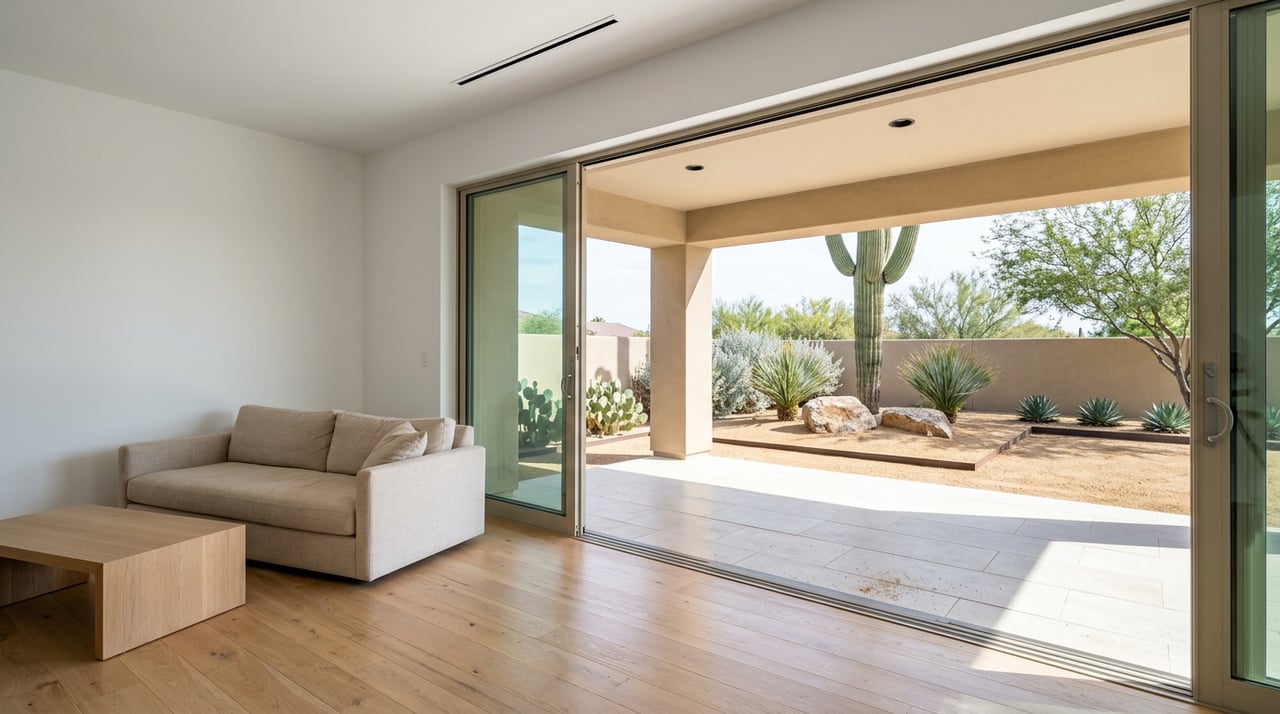
Negative-edge pools that frame a view, covered outdoor rooms, guest casitas, sport courts, and resort-style backyards can shift your price meaningfully. In many cases, the lifestyle package outside matters as much as interior upgrades.
Location and access
Proximity to private clubs and luxury resorts, convenience to airport routes, and central access to Scottsdale and Phoenix form an extra premium layer for relocating or second-home buyers.
A step-by-step pricing plan
Use this framework to build a defendable list price in a low-volume, high-variance market.
- Define your micro-market
- Map where your home sits relative to Camelback and Mummy Mountain, guard-gated enclaves, club adjacency, and 1 to 3 acre flat-lot pockets. Each has its own buyer pool and price bands.
- Assemble verified comparables
- Start with the most similar closings in the last 6 to 12 months in the same micro-market.
- Add any off-market trades you can confirm through public record.
- Where possible, gather land sales that illuminate the value of acreage and view.
- Build an adjustment checklist
- Adjust for lot size, view quality and direction, condition and finishes, outdoor program, guest casitas or secondary dwellings, and site constraints such as access or easements.
- Calibrate dollar adjustments to recent local trades, not national rules of thumb. Academic literature supports the existence of view premiums, but their magnitude must be estimated from local evidence.
- Cross-check models
- Run both a price-per-square-foot cross-check and a land-plus-improvements approach. In Paradise Valley, the land and view component can be more important than incremental interior square footage.
- Choose your listing position
- If urgency matters, price just below a crowded search band to foster competition. If the home has unique, supportable premiums and time is on your side, consider listing at or slightly above the indicated range.
- For truly rare estates, a discreet, invitation-only campaign can be appropriate when paired with a clear plan for compliance with MLS rules if you later go public.
- Execute high-quality marketing and vet buyers
- Use architectural photography, drone footage that showcases the lot and view, floor plans, and private broker previews.
- Qualify buyers with proof of funds or jumbo pre-approvals. Establish privacy protocols early for high-net-worth showings.
- Manage actively with clear checkpoints
- In a thin market, a stale list can take months to recover. Set a 30 to 60 day decision point tied to showings, feedback, and offers. If the market is not confirming your price, adjust decisively rather than in tiny steps.
- Prepare for appraisal and financing
- For $5M to $10M-plus homes, appraisers may cite a lack of very close comps. Assemble a comp and documentation packet in advance, including recent land sales, architectural pedigree, and upgrade lists. Industry guidance emphasizes preparation and clear pricing rationale to reduce risk.
Pricing note: Confirm any quoted sale price with the Maricopa County Recorder or ARMLS before you rely on it. Public websites sometimes show slightly different figures for the same closing.
Recent sales to calibrate your range
Use these publicly reported closings to understand current price bands. Always verify final details before making a pricing decision.
- 5902 E Cactus Wren Rd: reported at approximately $14,575,000 in March 2026. High-end finish and lot factors moved local medians that month.
- 7835 N Ironwood Dr: several public reports of a sale in the mid-teens millions in 2024 to 2025, on roughly 3.3 acres with a Mummy Mountain setting.
- 6021 N 44th St: reported at about $5,880,000 in March 2026, closing well over list, illustrating buyer competition for the right product.
- 6802 E Sunnyvale Rd: mid-upper segment resale reported near $6.5M.
- 9131 N 48th Pl: reported around $2,900,000 in March 2026, illustrating the lower end of the town’s luxury band.
- Example land sale: 7737 N Calle Caballeros, about 1.27 acres, reported at roughly $3.5M on January 29, 2026, highlighting how raw acreage trades as a separate valuation line.
Price per square foot vs. land value
Price per square foot is a useful cross-check, but it can mislead you in Paradise Valley. A hillside lot with a protected view and a resort-grade outdoor program can justify a much higher land component than a larger but less private interior lot. Run both models, then reconcile them using the comps that are most similar in lot, view, and lifestyle amenities.
The role of zoning in your price
Large-lot minimums and generous setbacks keep density low and preserve estate-scale living. That means replacement inventory for your home may be extremely limited. For buyers weighing a new build against your finished property, the permitted build envelope, usable pad, and timeline to construction can matter more than raw square footage. You can review Paradise Valley’s height and area regulations to understand your lot’s potential and constraints.
How to show your value to appraisers and buyers
- Create a one-page value summary that ties your asking price to three to five verified comps, with clear dollar adjustments.
- Document design pedigree, recent renovations, and system upgrades.
- Include a lot map showing orientation, privacy, and view corridors, plus any preserve protections that support view permanence. For context on preserved areas, see the Mountain Preserve Trust.
- Keep a running log of showings, feedback, and material updates. If you reduce price, note why and what you learned.
Market snapshots and what to watch
Because the town’s volume is small, watch the composition of monthly closings. A single eight-figure sale can push the median higher even if most homes are trading within a tighter band. County-level valuations also move, but remember they are not a micro-market pricing tool. For a broad backdrop, see the Maricopa County Assessor’s median change report, then calibrate to local comps.
Ready to calibrate your price?
If you want a defendable list price backed by verified comps, zoning context, and a clear launch plan, connect with the Huffman Davis Group for a confidential consultation. You will work directly with senior agents who understand Paradise Valley’s micro-markets and how to present your home to the right buyers.
FAQs
How should I price a Paradise Valley home with a mountain view?
- Start with the closest comps that share a similar view type and orientation, then apply dollar adjustments. View premiums are real, but the size depends on view quality and permanence; protected preserve views are often worth more than partial or obstructed exposures.
Do larger Paradise Valley lots always sell for more?
- Generally yes, but only if the extra acreage is usable and supports privacy or an expanded outdoor program. Treat land as its own value line and cross-check with recent nearby land and estate sales.
Is price per square foot reliable for luxury homes in PV?
- Use it as a secondary check. In PV, the land and view component often outweighs incremental interior square footage, so a land-plus-improvements model usually gives a clearer result.
Should I consider a private, off-market listing first?
- It can be appropriate for rare estates that require discretion, but you should balance privacy with exposure and ensure any strategy complies with MLS rules if you later go public.
How do I avoid appraisal issues on an eight-figure listing?
- Prepare a robust comp packet with verified sales, land trades, and documentation of architecture, renovations, and systems. Engage lenders and appraisers who understand ultra-luxury assignments, and be ready to explain your pricing logic clearly.